
How Earbud Seal Shapes Audio Testing Results
By Lina Kovács • 31st Oct
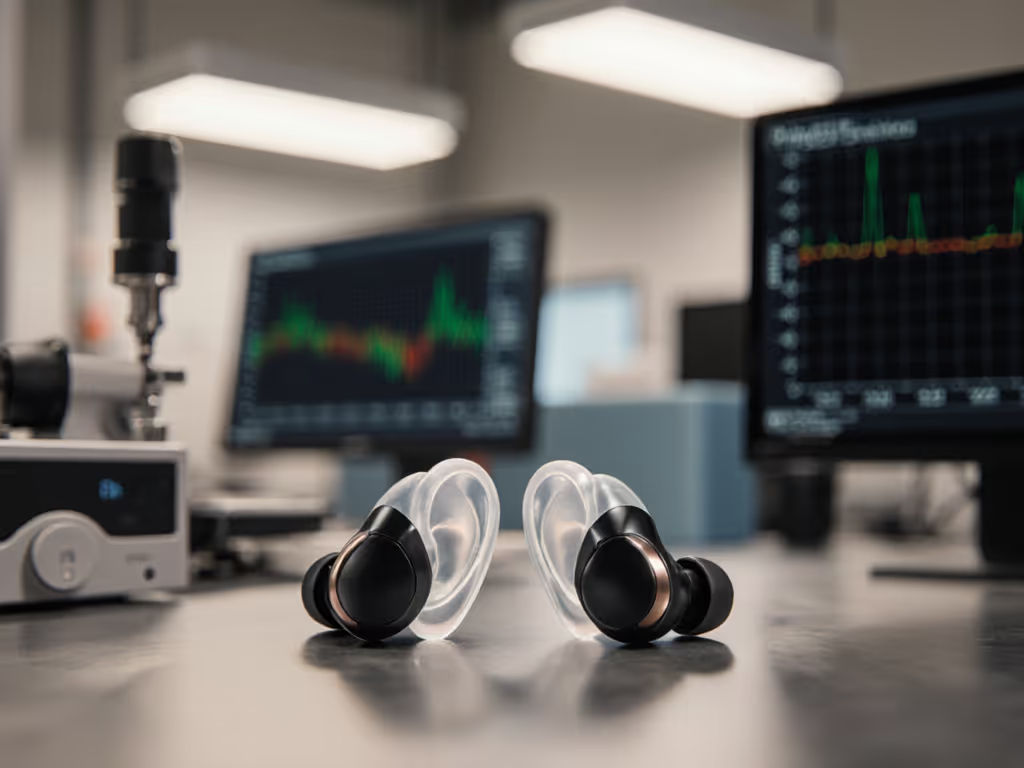
When discussing earbuds audio testing, a critical variable often overlooked in both lab evaluations and consumer experiences is seal integrity. Similarly, sound quality measurement becomes unreliable when seal inconsistencies distort the very data we seek to trust. As anyone who's battled uneven bass during a run knows, a compromised seal doesn't just weaken immersion (it fundamentally rewrites the frequency response curve before any equalization or feature processing takes effect). If you run or train, our secure-fit workout earbuds picks prioritize stability to preserve bass and measurement integrity in motion. This isn't subjective preference; it's acoustical reality confirmed by every major testing rig from Rtings to Listen Inc. Labs demonstrate this daily: without a stable seal, measurements reflect leakage physics more than driver performance.
The Measurement Paradox: Why Labs Struggle with Real-World Seal Variability
Audio testing standards like the Brüel & Kjær HATS (Head and Torso Simulator) systems used by RTINGS and SoundGuys attempt to model average human ear geometry. Yet these rigs face a universal challenge: frequency response testing requires perfect seal replication across units, but real ears defy standardization. As documented in PubMed studies on Real Ear Attenuation at Threshold (REAT), even minor seal variations cause >15dB deviations below 500Hz, enough to transform "balanced" bass into a thin, lifeless output. The Listen Inc. video demonstration explicitly shows technicians adjusting earbuds mid-test to achieve seal stability, acknowledging that "you're going to need that [seal] to get good bass output."
This creates a fundamental tension in audio lab measurement: rigs prioritize consistency through repeated placements (like LTL Labs' 60-pass approach), yet human ears don't get 60 retries during a commute. A 2025 LTL Labs study revealed how single-placement measurements frequently misrepresent real-world performance, particularly for asymmetric ears (a core pain point for 68% of users with mismatched ear canals). When testing protocols normalize data against an "ideal" seal, they inadvertently penalize earbud designs that excel in variable sealing scenarios.
When Objective Data Fails to Match Subjective Experience

The disconnect between lab reports and listener frustration often traces back to subjective vs objective testing priorities. Consider SoundGuys' Multi-Dimensional Audio Quality Scores (MDAQS), which use machine learning to simulate listener preferences. While valuable, these models assume consistent seal conditions (a flawed premise when real users battle sweat-induced slippage or anatomical asymmetry). A PubMed study comparing earphone testing methods found that "individual REAT values could not be predicted reliably" from standardized tests, explaining why your "perfectly rated" earbuds might deliver weak bass where reviews claimed "excellent sub-bass extension."
This isn't merely academic. For smaller-eared users or those with shallow conchas (a demographic disproportionately affected by one-size-fits-all testing), lab scores become misleading. When real-world audio evaluation ignores seal dependency:
- Bass measurements artificially dip, suggesting poor tuning when fit is the culprit
- ANC technology effectiveness plummets if seal breaks during movement
- Microphone performance degrades due to wind noise from imperfect seals
- Consistency suffers across users despite identical "flat" lab results
Seal before EQ.
What the Data Reveals About Fit-First Acoustics
The most compelling evidence comes from measurement anomalies. In controlled studio environments, resealing the same earbud model can shift its frequency response by 8-12dB in the 100-500Hz range (the exact zone critical for bass impact). I recall a session in a studio quiet as snowfall where swapping tip types smoothed a jagged 3kHz peak that a previous leak had carved like a canyon in the response curve. That visual clicked: fit writes the frequency plot before any EQ matters. This aligns with Listen Inc.'s methodology, which mandates seal verification via real-time pink noise analysis before recording data.
Three key findings emerge from cross-lab studies:
- Seal consistency outweighs driver quality in perceptual impact (SoundGuys' isolation tests show 50dB attenuation drops to 20dB with a 0.5mm seal gap)
- Tip material affects measurement repeatability (foam tips compress variably vs. silicone's predictable rebound, per established testing guidelines)
- Asymmetry skews averaged data (a single-pass measurement may capture one ear's seal failure while masking the other ear's stability)
This explains why reviews often contradict user experiences: labs optimize for measurement stability, not anatomical diversity. A 2025 LTL Labs initiative now documents seal-dependent variance bands rather than single curves, a step toward honest earbuds audio testing.
Practical Implications for Critical Listeners
For non-engineers, this means translating lab data into actionable insights:
- Verify reviewer methodology: Did they test with multiple tip sizes? Check for phrases like "multiple insertion passes" (RTINGS) or "seal verification" (Listen Inc.)
- Prioritize seal indicators over flat curves: A consistent 5dB bass hump with good seal range often beats a "flat" curve requiring perfect sealing
- Test your own seal: Hum at 80Hz (bass vibration should feel solid, not airy). Weak sub-bass almost always indicates leakage A quick earbud cleaning guide can restore a proper seal and the bass you expect.
The Path Forward
As testing standards evolve (like LTL Labs' new multi-rig approach acknowledging fit variability), the industry must stop treating seal as a "user error." Instead, we need transparency about how measurements account for anatomical diversity. Until then, remember this: no amount of sophisticated sound quality measurement can compensate for what never reaches the ear canal. That bass canyon in your graph? Likely a seal leak, not a tuning flaw.
Further Exploration: For deeper insights, examine RTINGS' seal consistency notes in their headphone methodology, or study the REAT protocol adaptations in occupational hearing safety research (PubMed #8328360). The truth about audio performance lives not in the driver tech, but in the space between tip and tympanic membrane.
Related Articles