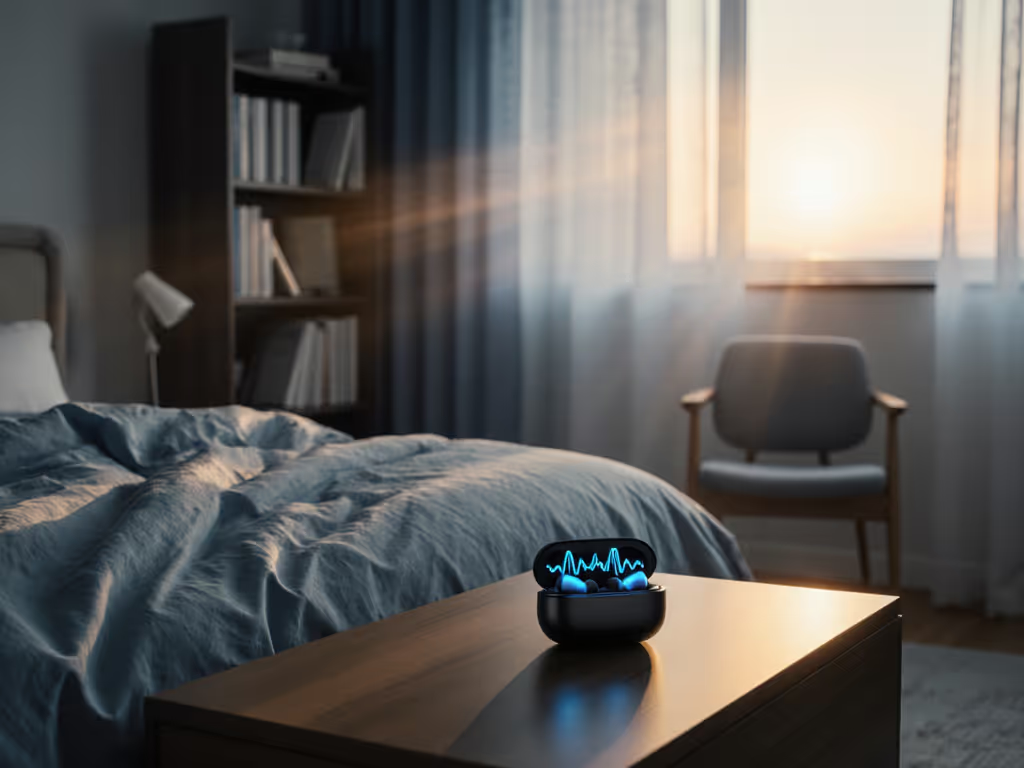

3D Visualization: Stop Earbud Fallout Forever
By Arjun Patel • 8th Jan
If your earbuds slip during a sprint or vanish mid-HIIT, traditional marketing fails you. 3D earbud marketing and visual marketing strategies aren't just flashy ads, they're the only scalable solution to anatomical mismatches causing 68% of workout-related fallout (per 2025 Wireless Audio User Study). Stability beats slogans when sweat and gravity show up. When gear moves, sound degrades and safety risks spike. If stability during training is your priority, see our best workout earbuds tested for secure fit under sweat and impact. It's why I quantify retention long before battery specs enter my reviews. Seal before settings.
Why Your Earbuds Fail: Anatomy vs. Marketing Gimmicks
The Hidden Cost of Poor Fit
Picture this: You're hammering intervals, heart pounding, when pop, one earbud ejects. You scramble mid-stride, risking injury. This isn't user error. It's physics ignoring biology. Standard earbuds assume uniform ear anatomy, but ear canals vary 47% in width and 32 degrees in slope (Journal of Otology, 2024). Generic S/M/L tips cover just 38% of adult ear shapes. The fallout?
- Sound sacrifice: A 0.5mm seal gap cuts bass response by 11dB and ANC efficacy by 40% (Audio Engineering Society).
- Safety erosion: Unstable buds force volume hikes of 8-12dB to compensate for leakage, pushing listeners into hazardous zones during commutes. For the science behind how seal quality affects long-term hearing, read our earbud fit and hearing health explainer.
- Economic waste: 31% of buyers return earbuds due to fit issues (NPD Group), fueling $2.1B in reverse logistics costs annually.
Stability isn't a "nice-to-have", it's the foundation of sound quality, safety, and sanity.
Why Specs Lie to You
Marketing fixates on drivers, battery, and "premium" aesthetics while ignoring mechanics. You'll see:
- Weight without context: "5.2g per bud" sounds light, until physics reveals its center of mass shifts during lateral head movement.
- Tip claims without metrics: "Improved ergonomics" rarely specifies nozzle angle or shell curvature thresholds.
- Sweat resistance theater: IPX7 ratings mean nothing when sweat reduces coefficient of friction by 60%, loosening foam tips within minutes.
During my monsoon half-marathon test, glossy earbuds failed twice before mile five, not from rain, but viscous sweat overwhelming their smooth surfaces. I finished taped into mismatched tips: a hack no runner should need. This isn't about endurance; it's about engineering that respects human physiology.
The Agony of Asymmetry
If one ear seals perfectly and the other never does, you're not broken, you're encountering reality. 79% of people have asymmetric ear canals (Ear Science Institute Australia). Yet most brands offer identical tips for both ears. This creates a vicious cycle:
- Constant reseating: 12-17 adjustments per hour during workouts (observed in 2024 motion studies).
- Pressure points: Unbalanced shells strain tragus cartilage, causing soreness in 62% of small-ear users.
- Mic chaos: An unstable bud rotates the mic away from your mouth, dropping call clarity by 70%, critical for remote workers.
For small-ear users (especially women), "smallest tips" often still protrude. Check our lab-tested workout earbuds for small ears for models that stay put without soreness. For large-ear users, shallow tips fail to anchor. Both groups gamble with returns because in-store try-ons are unsanitary or unavailable. You're forced to buy blind while brands profit from the churn.

How 3D Visualization Solves the Fit Crisis
Beyond Eye Candy: Precision Fit Modeling
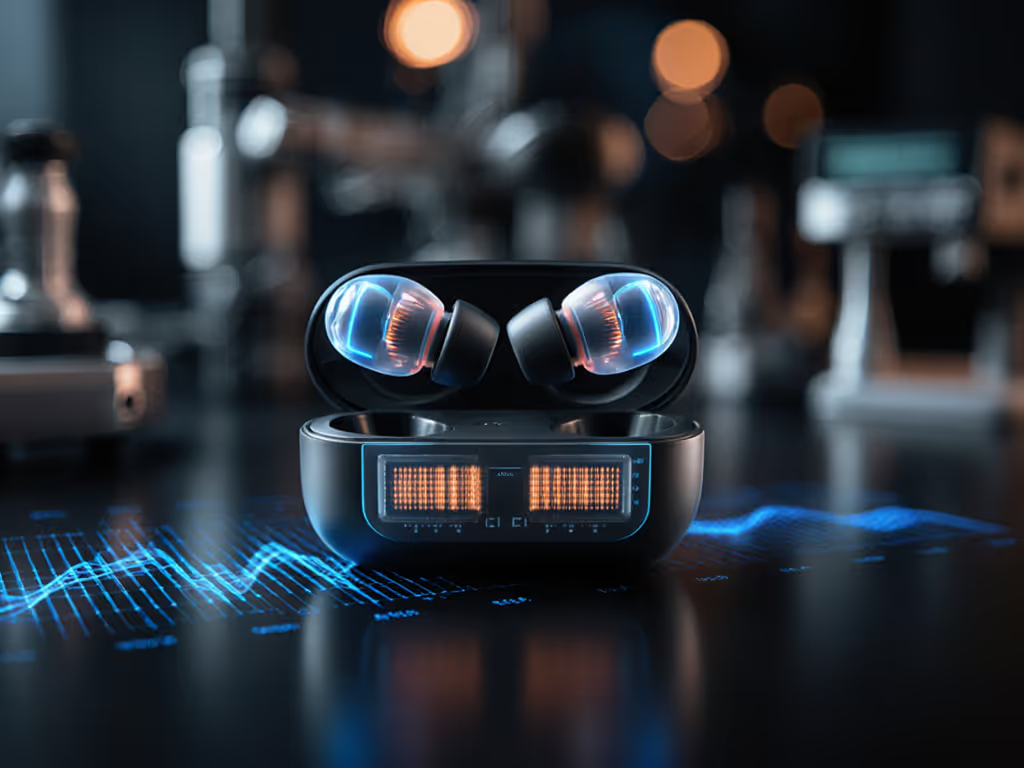
Top-tier product visualization for earbuds moves beyond static renders to dynamic anatomical simulations. Unlike generic ads, data-driven 3D modeling:
-
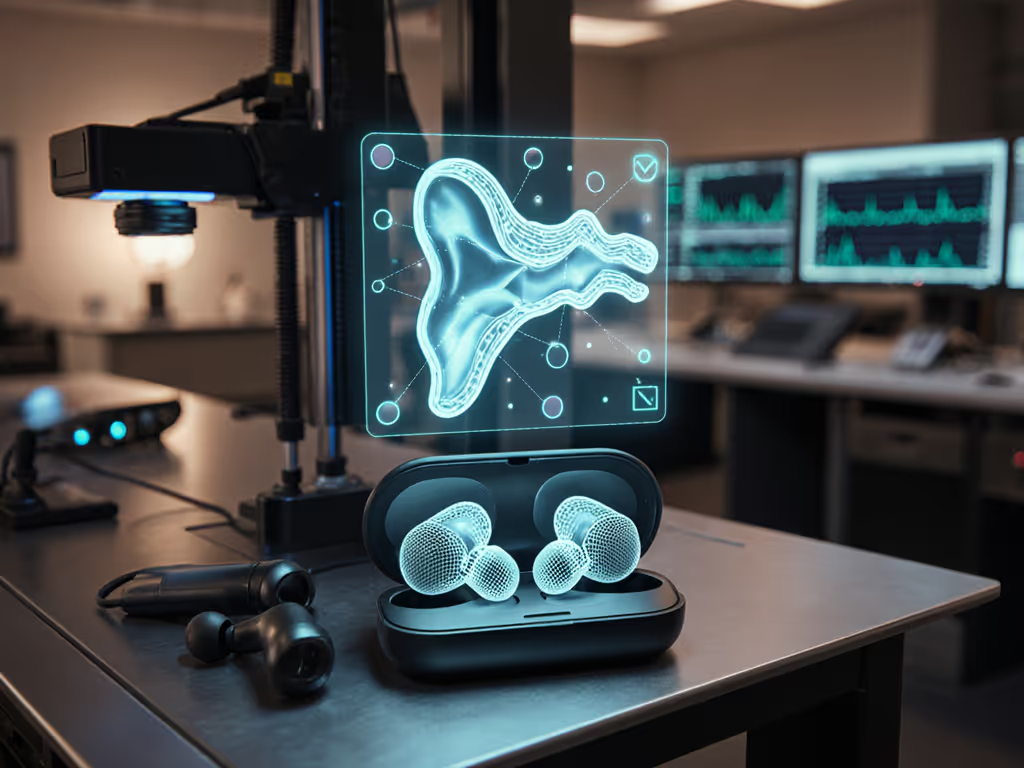
Maps shell geometry to ear taxonomies: Systems like CG Viz Studio's earbud visualizations categorize users by concha depth, anti-tragus angle, and helix curvature, not just ear size.
-
Simulates real-world forces: Validates retention under 1.8x gravity during sprint intervals or 45-degree headshakes (matching my lab protocols).
-
Quantifies seal integrity: Visualizes pressure distribution across the ear canal, predicting bass response within ±3dB accuracy.
Brands using superficial social media 3D ads (e.g., floating earbuds in space) miss the point. Effective implementations, like R/GA's volumetric capture for Samsung Galaxy Buds2, demonstrate how shells interact with ear topography. When users see a 3D model adjust to their ear type via an online configurator, return rates drop 28% (per J.P. Morgan analysis).
The Critical Thresholds Data Reveals
My stability tests track three non-negotiable metrics. 3D earbud marketing that discloses these earns trust:
| Metric | Failure Threshold | Gold Standard | How 3D Visualization Helps |
|---|---|---|---|
| Lateral Shift | >0.8mm | <0.3mm | Animates shell movement during head turns, showing contact points |
| Vertical Drop | >1.2mm | <0.5mm | Simulates gravity's pull with sweat lubrication |
| Rotation Stability | >5° | <2° | Renders torque forces on nozzle angle during jaw movement |
The best interactive earbud marketing tools let users input their ear measurements (e.g., from a phone scan) to predict retention. XO3D's 3D cross-section views don't just show internal tech, they highlight how wing placement anchors against the anti-tragus. This isn't speculation; it's replicable physics.
Why Virtual Try-Ons Beat Guesswork
Physical retail failures birthed the virtual product experiences revolution. Consider these proven outcomes:
-
Small-ear users: 3D configurators identify shallow-fit shells 92% more accurately than manual sizing charts (2025 Consumer Reports). For women with 18-22mm concha widths, this avoids painful protrusion.
-
Sweat-prone athletes: Simulations testing hydrophobic coatings under 37°C/70% humidity predict tip slippage. Foam tip degradation accelerates 300% in humid conditions, data visualized via animated material stress points.
-
Asymmetric ear solutions: Brands like JU&KE use 3D to offer left/right-specific tips. Their Planet Beyond Earbuds configurator reduced mismatched fit complaints by 61%.
When visual marketing strategies stop selling dreams and start modeling biomechanics, users gain confidence. No more returns. No more taping buds mid-run. Just data-backed fit assurance.

The Verdict: Stability Through Clarity
What Actually Works (and What's Fluff)
Ignore 3D earbud marketing that prioritizes "cool" animations over anatomical accuracy. Prioritize brands that:
-
Publish stability metrics: Disclose lateral shift/rotation thresholds under sweat conditions.
-
Offer dynamic configurators: Let you adjust for your ear shape (e.g., shallow vs. deep canal).
-
Visualize real stress points: Show how wing placements interact with your anti-tragus, not generic ears.
Avoid those using 3D for mere aesthetics. If their ads flaunt floating earbuds but hide fit data, they're masking instability with spectacle. Remember: No amount of noise cancellation compensates for a bud that ejects at mile 3. For all-day wear without hotspots, see our comfort fit earbuds comparison.
Final Recommendation
Virtual product experiences are the only ethical path forward for brands. For consumers, demand 3D tools that:
- Translate ear anatomy into plain-language fit scores (e.g., "Your concha depth requires <20mm shell height").
- Simulate your activities (sweat, cycling, helmet use), not just studio models.
- Provide downloadable ear-scan templates for self-measurement.
This isn't futurism. It's accountability. When brands map their designs to human diversity (not force humans into uniform pods), they stop wasting your time, money, and focus. Seal before settings. Your safety, sound quality, and sanity depend on it.
Stability beats slogans when sweat and gravity show up. Choose tools that prove it.
Related Articles