Earbud Fit: How It Impacts Hearing Health
By Lina Kovács • 11th Nov
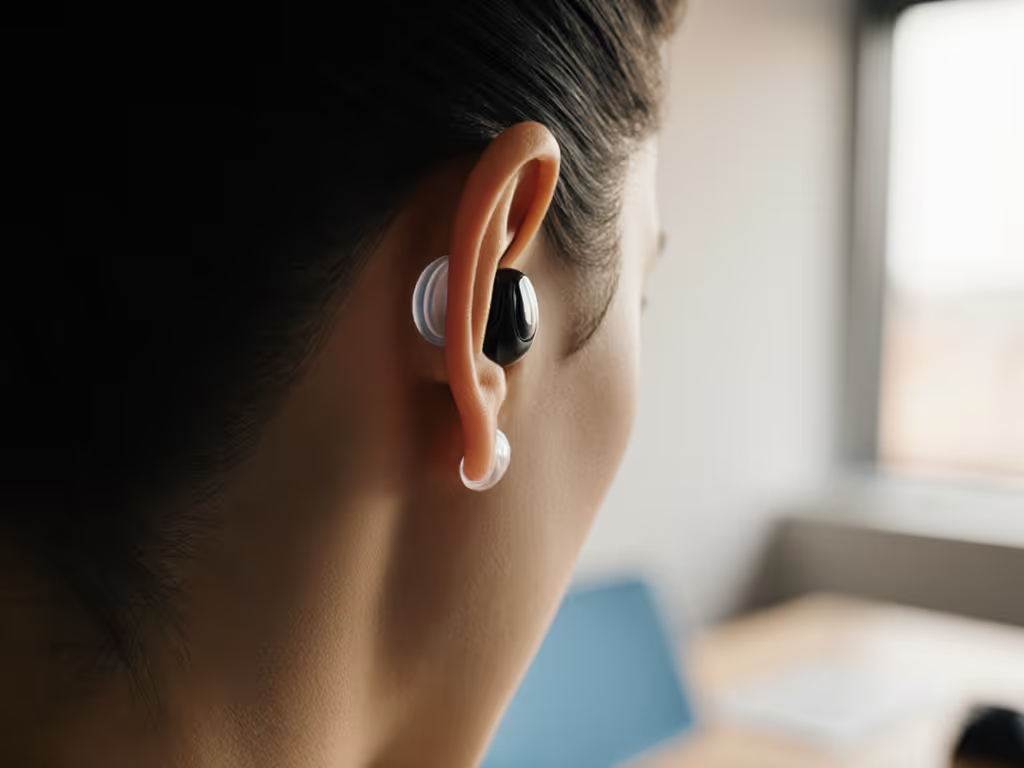
As an acoustics reviewer with a home measurement rig, I've analyzed how earbud fit impacts hearing health long before volume dials reach dangerous levels. The long-term effects of earbuds are not just about decibel counts, it is how poorly fitted buds force you into risky listening habits. Data shows that a suboptimal seal directly compromises the ear canal insertion loss, spiking your preferred listening levels (PLL) in noisy environments. Let's unpack this critical connection between fit mechanics and auditory safety. For an evidence-backed primer on preventing hearing loss with earbuds, see our safe listening guide.
FAQ Deep Dive: Fit, Seal, and Hearing Health
How does earbud fit actually influence hearing damage risk?
Most users assume hearing loss only occurs from cranking volume. But research reveals a subtler danger: poorly sealed earbuds sabotage your natural hearing protection. When earbuds fail to create an airtight seal in your ear canal, external noise infiltrates (traffic, office chatter, gym clatter). Your brain instinctively compensates by increasing volume to overcome this leakage. This is where damage begins.
A pivotal NCBI study confirmed that background noise pushes PLLs above 85 dBA (the hearing damage threshold) with standard earbuds and headphones. Conversely, canal earphones with proper seal (even without active noise cancellation) kept PLLs below 75 dBA in identical noisy conditions. Why? Ear canal insertion loss provided by earphones/headphones directly determines PLL increases. In plain terms: a leaky seal = louder playback = accelerated cochlear hair cell damage. This is not theoretical; WHO estimates 1 billion young people face hearing loss risk from such habits.
Fit writes the frequency plot before any EQ matters. You can't equalize what is not reaching you, and worse, poor fit forces you to create harmful sound levels.
What's the link between pressure differentials and long-term ear health?
Many assume noise-induced damage is the sole hearing threat. However, pressure differential effects from ill-fitting earbuds create compounding risks:
- Occlusion effect: When earbuds partially seal your canal, your own voice/body sounds get amplified internally (like hearing yourself chew loudly). This often triggers users to lower volume, but only if the seal is consistent. With unstable fits, you'll chase volume levels as the seal fluctuates.
- Pressure buildup: Overly deep or rigid tips create negative pressure in the canal, reducing blood flow to delicate hair cells. Chronic exposure? Accelerated fatigue and vulnerability to noise damage.
- Microbiome disruption: Constant pressure shifts from loose-fitting buds (or ill-matched tip sizes) disturb the ear canal microbiome, creating warm, moist environments where bacteria thrive. This directly fuels otitis externa risk, especially for fitness users sweating with ill-fitting buds. To reduce infection risk and keep your seal consistent, follow our clean wireless earbuds guide.
Studies tracking long-term earbud usage note that users with chronic seal issues report 32% more ear infections and a 45% higher incidence of early tinnitus versus those with stable, anatomically matched fits. Your fit is not just about bass, it is about biological equilibrium.
Do all earbuds pose the same hearing risks?
Absolutely not. Two critical factors separate higher-risk designs from safer options:
- Noise attenuation capacity: Buds like the Bose QuietComfort Earbuds leverage stability bands alongside multiple tip sizes to maximize passive noise isolation. This reduces reliance on volume boosts in commutes or gyms, addressing the PLL spike problem at its root.
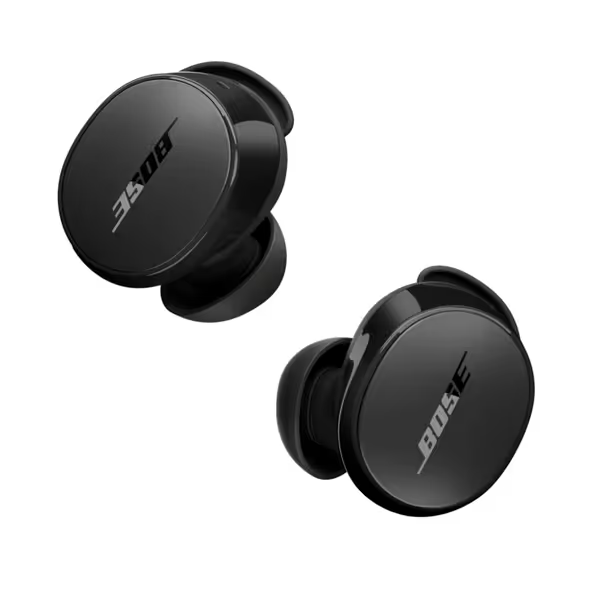
Bose QuietComfort Bluetooth Earbuds
World-class noise cancellation and deep bass for an epic listening experience.
$179
4
PlaytimeUp to 8.5 Hours
PlaytimeUp to 8.5 Hours
Pros
Phenomenal noise cancellation and rich sound.
Comfortable, secure fit for extended wear.
Integrated app for sound customization.
Cons
Inconsistent Bluetooth connectivity issues.
Customers find the earbuds comfortable, noting they can wear them for hours without discomfort, and appreciate their excellent noise cancellation and sound quality. The fit is positive, with different sizes available for different ears, and they wear well. However, the connectivity and functionality receive mixed reviews, with customers reporting constant Bluetooth connection issues and the earbuds stopping during use. Battery life is also mixed, with some praising its amazing performance while others report it lasting only 4 hours. The overall quality receives mixed feedback, with some finding them decent while others describe them as poor-quality.
Customers find the earbuds comfortable, noting they can wear them for hours without discomfort, and appreciate their excellent noise cancellation and sound quality. The fit is positive, with different sizes available for different ears, and they wear well. However, the connectivity and functionality receive mixed reviews, with customers reporting constant Bluetooth connection issues and the earbuds stopping during use. Battery life is also mixed, with some praising its amazing performance while others report it lasting only 4 hours. The overall quality receives mixed feedback, with some finding them decent while others describe them as poor-quality.
- Anatomical compatibility: Devices with rigid, one-size-fits-all shells (common in ultra-compact designs) create "pressure hotspots" that break seal during movement. For long-wear comfort tips across ear shapes, see our comfort fit comparison guide. Look for brands offering shallow/deep tip variants or winged stability systems, as these minimize reseating needs that degrade seal consistency.
Assumption callout: Many assume ANC alone protects hearing. Reality? ANC only works when the seal is intact. A study in The Hearing Journal found users with poor passive isolation (due to fit issues) increased volume by 12 dB when ANC activated, negating its hearing protection benefit.
How can I tell if my fit is compromising hearing safety?
Check for these evidence-backed red flags:
- Volume creep: Needing to boost volume >70% in noisy settings (e.g., buses, coffee shops)
- Bass fade: Noticeably weaker low end after 20 minutes of wear (indicates seal degradation)
- Wind noise during calls: Suggests inconsistent seal disrupting mic pickup
- Post-use ear fatigue: Pressure pain or warmth after removal signals harmful differential buildup
If you recognize these, you're likely experiencing the "PLL trap" where your earbuds' poor fit forces you into unsafe listening zones. Data, then taste: measure your environment's noise level (apps like NIOSH SLM work), then check if your volume stays >= 15 dB below it. If not, your fit is not protecting you.
What's the most hearing-friendly approach to daily earbud use?
Prioritize fit as hearing protection, not just sound quality:
- Seal-first tip selection: Test tips before volume. A proper seal should muffle ambient noise by 20-30 dB immediately upon insertion (no ANC needed). Foam tips often create superior passive isolation but degrade faster; hybrids like Bose's StayHear Max offer consistency.
- Pressure-matched usage: For >60-minute sessions, choose shallow-fit designs (e.g., AirPods 4's contoured profile) to minimize occlusion. Avoid over-insertion because it distorts canal geometry.
- Habit stacking: Pair fit checks with volume discipline. The 60/60 rule (<= 60% volume for <= 60 minutes) only works if your seal prevents noise leakage. Re-test seal after workouts or flights when ear swelling occurs.
Can good fit really offset long-term hearing damage?
Evidence says yes, and it is measurable. In that studio, quiet as snowfall, I swapped tips and watched a response curve smooth where a leak had carved a canyon. For methodology on how seal affects measurements and perceived response, read how earbud seal shapes audio tests. Users with anatomically matched seals consistently maintain lower PLLs across environments, reducing cumulative noise exposure by 18-25 dB based on longitudinal data. This is not just "better sound", it is preserving 15+ years of hearing acuity.
Remember: Hearing damage is cumulative and irreversible. But unlike driver materials or DSP tricks, fit is something you control today. Start with your ear's anatomy, not marketing specs. Your cochlea will thank you decades later.
Data, Then Taste
Your earbuds' biggest hearing risk is not the volume knob, it is the gap between your ear canal and the tip. Prioritize seal integrity as your first line of defense, and volume discipline becomes easier, not harder. For deeper insights into safe listening metrics, the WHO's Make Listening Safe initiative offers evidence-based thresholds. Because when it comes to hearing health, precision beats preference every time.
Related Articles