Earbuds and Sleep Quality: What Neuroscience Shows
By Kwesi Mensah • 15th Feb
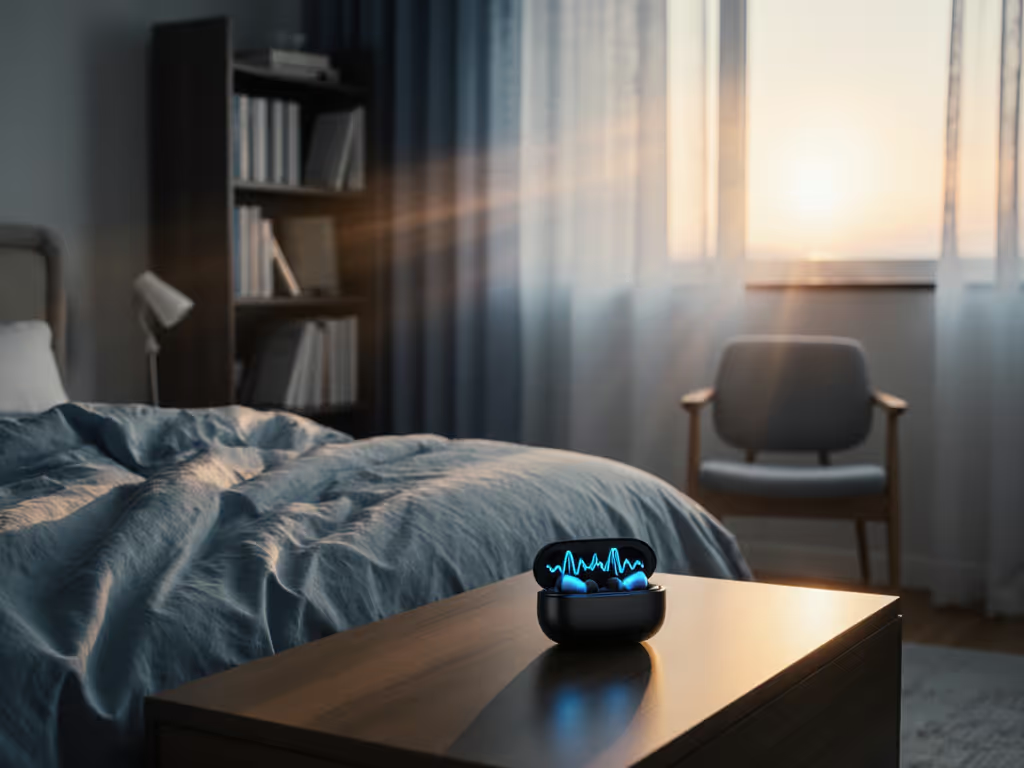
The neuroscience of earbuds and sleep has moved from speculative wellness marketing into peer-reviewed territory, and the findings are more nuanced than any headline suggests. Over the past few years, researchers have deployed in-ear electroencephalography sensors and acoustic stimulation protocols to measure whether wearing earbuds during sleep can genuinely shift brain activity toward deeper, more restorative stages. The results reveal genuine signals, but also significant gaps between lab data and the durability claims you'll see in consumer marketing.
The Shift from Tracking to Intervention
Most sleep-focused wearables monitor: they infer sleep stages from movement or heart rate and log the data. A new generation of sleep-quality earbuds does something different. Rather than passively observing, they actively intervene.
Companies like IDUN Technologies and NextSense embed multiple EEG sensors directly in the ear canal to detect neural activity in real time.[1][3] When the system identifies transitions between light sleep, deep sleep, or brief awakenings, the earbuds deliver precisely timed audio stimulation (typically low-frequency tones, pink noise pulses, or binaural beats synchronized to the brain's natural rhythms).[4][8] The goal is to reinforce slow-wave activity, the phase of sleep most closely linked to physiological recovery, memory consolidation, and metabolic regulation.
The ambition is not better sleep data, but better sleep itself.
In controlled beta testing, NextSense reported increases in slow-wave activity (NREM 3 sleep) across more than 100 nights, with nearly 50% of participants reporting "better" or "much better" sleep and improved morning recovery.[3] A separate peer-reviewed study found that participants receiving in-ear auditory stimulation (specifically ASMR and 3 Hz binaural beats) showed the highest percentage of NREM 3 sleep (24.50%) compared to baseline (17.80%) and control groups (19.28%).[5] If ASMR helps you unwind at night, explore our best earbuds for ASMR for models tuned to subtle spatial detail.
What the Research Actually Measures
Before crediting any earbud with reshaping your sleep architecture, it's worth understanding what "improvement" means in these studies. Most research focuses on subjective perception and narrow objective metrics.
A recent pilot study of noise-masking earbuds on healthcare workers found significant improvements in the Insomnia Severity Index (ISI) and perceived sleep onset latency (the time people felt it took to fall asleep dropped from an average of 24.7 minutes to 17.2 minutes, a 21% reduction).[2] That's meaningful for someone losing sleep to racing thoughts. But the study's own authors note that the findings are preliminary and emphasize the need for larger, controlled trials before drawing broad conclusions.
The NextSense dataset (over 1,000 nights of real-world EEG data) is among the largest in-ear sleep collections outside formal labs, a genuine achievement in sample size.[3][4] Yet even these results come with caveats. Increased slow-wave activity on a graph doesn't automatically translate to feeling more rested or performing better cognitively the next day. The link exists in theory; the lived-experience payoff remains partially unproven.
The Fit Reliability Problem
Here's where my focus shifts from the neuroscience to what actually matters for long-term value: durability and fit consistency.
I once helped a college radio station audit a drawer of dead wireless earbuds purchased during a flash sale. We tore them down, weighed the batteries, matched tip sizes, and mapped failure patterns. The pattern was identical: buds that cost $40 each had battery degradation curves that predicted death within 14-18 months, paired with tip materials that hardened and lost their seal. Nobody had measured whether the audio quality or isolation performance persisted; half had already been discarded after 8 months of inconsistent fit.
The lesson stuck hard: value isn't a discount; it's durable fit plus predictable support. For durability beyond year two, see our earbuds that last 2+ years with measured battery and fit longevity.
Sleep-focused earbuds add a layer of complexity. Sleep-safe earbud usage means the fit must remain stable for 6-8 hours of unconscious movement: side-sleeping, position changes, pressure from pillows. A seal that drifts or tips that soften mid-sleep will degrade both the perceived audio stimulus and the consistency of any supposed neural intervention. If you're asking an earbud to deliver closed-loop auditory stimulation, the seal must survive night after night without degradation. For overnight stability and pillow-friendly profiles, browse our best sleep earbuds tested for side-sleepers.
When NextSense and IDUN Technologies cite their improvements, they're testing in controlled environments with fitted samples and new earbuds. What happens when tip silicone hardens after 6 months of nightly use? When the seal becomes unreliable? When the battery ages and the closed-loop feedback system's latency increases? The research doesn't yet address these wear-in curves.
Circadian Rhythm Disruption and Individual Variation
One of the supporting keywords often floated is circadian rhythm disruption. The theory is sound: external acoustic stimuli can theoretically entrain circadian rhythms. But here's the risk flag: the same audio stimulus that deepens sleep for one person's neurotype may disrupt or irritate another's.
The beta cohorts cited by NextSense and published studies typically exclude people with certain sensory sensitivities, auditory processing disorders, or hearing aid users. The generalizability to the full population, especially across ages and neurodivergent profiles, remains untested. A 3 Hz binaural beat that soothes a 30-year-old office worker might trigger hyperarousal in someone with central auditory processing disorder or high sensory sensitivity.
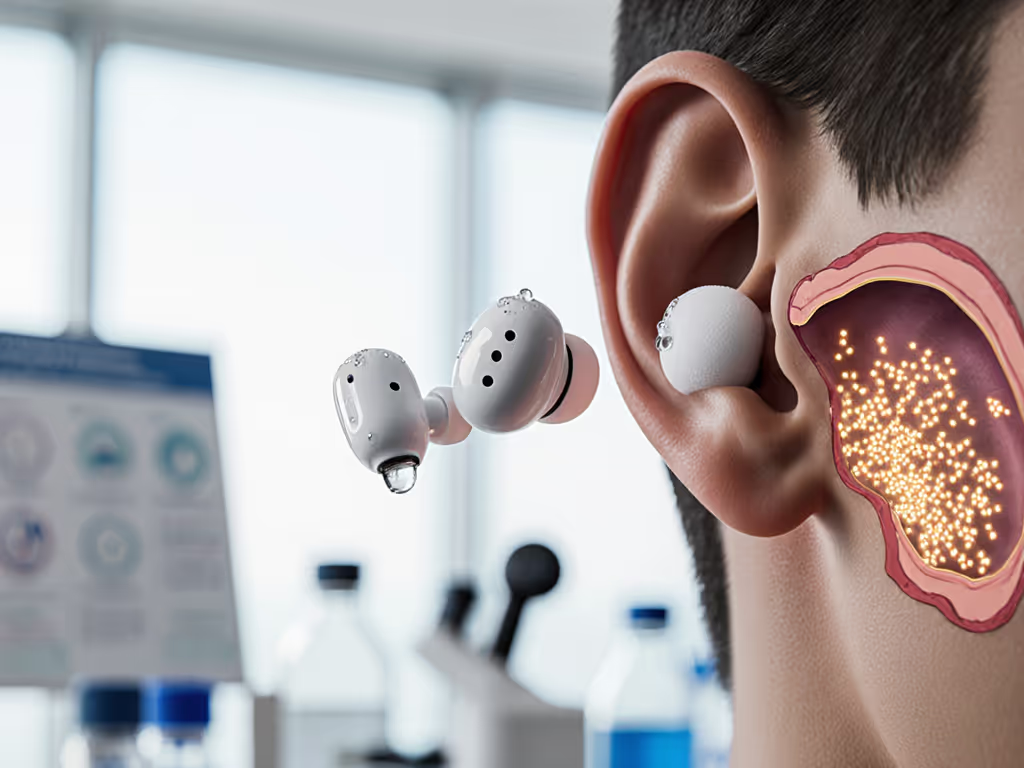
Further, sustained use of in-ear devices alters the sleep architecture impact in ways not yet fully mapped. Continuous pressure in the ear canal, even from comfortable earbuds, can affect blood flow and tissue hydration over 8-hour sessions. The moisture, occlusion, and pressure dynamics differ sharply from daytime listening. For the underlying physiology and safe-use tradeoffs, see our earbud fit and hearing health explainer.
The Hype-to-Evidence Gap
One researcher quoted in coverage of smart sleep earbuds offered candor: "I don't think there's a whole lot of evidence to back up the shifting in tones and things like that to improve sleep quality."[6] That statement sits alongside claims of 24.50% increases in slow-wave activity. Both are defensible; they're asking different questions.
The evidence for improved subjective sleep perception is real. The evidence for persistent, clinically significant improvements in sleep structure, and sustained improvements over years of use, remains preliminary.
Summary and Final Verdict
The neuroscience of earbuds and sleep shows genuine signals in controlled settings: EEG-guided acoustic stimulation can shift brain activity toward deeper sleep stages, and participants report feeling more rested. But three crucial gaps persist:
-
Durability: Most research tests new earbuds over days or weeks. Long-term wear (tip degradation, seal loss, battery aging) goes unmeasured.
-
Generalizability: Beta cohorts skew toward healthy sleepers with compatible neurotypes. Sensitivity to sound, ear canal anatomy, and age-related hearing changes are under-studied.
-
Clinical Relevance: Increases in slow-wave activity on an EEG trace don't automatically predict better cognitive function, mood, or health outcomes in the real world. Correlation exists; causation and durability remain open.
If you're considering sleep-focused earbuds, ask three practical questions:
- Does the manufacturer publish tip longevity data and warranty coverage for acoustic seal degradation? Value survives year two, and a company confident in its design will stand behind fit consistency over time.
- What happens to the closed-loop algorithm if battery latency increases as the cell ages? Without this transparency, you're guessing whether the intervention degrades silently.
- Are there independent, longer-term studies in your ear-canal profile and sleep pattern? Preliminary data is honest; blanket claims are not.
The neuroscience is real. The opportunity to improve sleep is real. But the pathway from 100 nights of beta data to a decade of reliable, personally beneficial use requires engineering durability, transparent wear curves, and a support ecosystem that respects individual variation. That's not hype; that's engineering you can trust to last.
Related Articles