Safe Earbuds for Kids: Volume-Limited Picks Guide
By Tomoko Sato • 3rd Dec
As a parent navigating the confusing world of audio gear, finding reliable children's earbud guides can feel overwhelming. You need safe earbuds for kids that prioritize hearing protection while surviving daily wear and tear. After logging hundreds of hours testing products, I've identified what truly matters: earbuds that disappear into your child's routine, not create new headaches. One bleary morning before a client demo, my own buds refused to switch from laptop to phone. That frustration sparked my reliability-focused approach. Because if switching isn't seamless, the features might as well not exist. For help picking buds that switch reliably between devices, see our guide to seamless device switching.
Why Most Kids Earbuds Fail Before Lunchtime
Children's ears differ significantly from adults. Their ear canals are still growing, more delicate, and require specialized design considerations. Standard earbuds cause discomfort, poor fit, and potentially dangerous volume exposure. Most parents don't realize:
- Children's hearing is 50% more sensitive than adults
- 85dB is the maximum safe volume limit for extended listening (per WHO guidelines)
- Standard ear tips don't accommodate smaller, still-developing ear canals
- Cheap plastics often cause skin irritation during extended wear
Good design disappears; earbuds should switch, fit, and stay out of your way. This principle guides my entire evaluation process.
Step 1: Verify Child-Safe Volume Limits
Before considering any other feature, confirm the volume limiting technology. Not all "volume-limited" products deliver reliable protection.
Volume Limiting Checklist
- Hardware-based limiter (not just software) that cannot be bypassed
- Max output capped at 85dB or lower (some experts recommend 75dB for younger children)
- Independent verification of volume limits (not just manufacturer claims)
- Consistent performance across music, video, and game content
Avoid products with only software-based volume limits. Children quickly learn to bypass these settings through simple workarounds. True hardware limiting provides peace of mind that's non-negotiable for child-safe volume limits.
I've tested numerous products where the advertised 85dB limit actually reached 100dB when playing certain content types. This discrepancy could cause permanent hearing damage before you even notice.
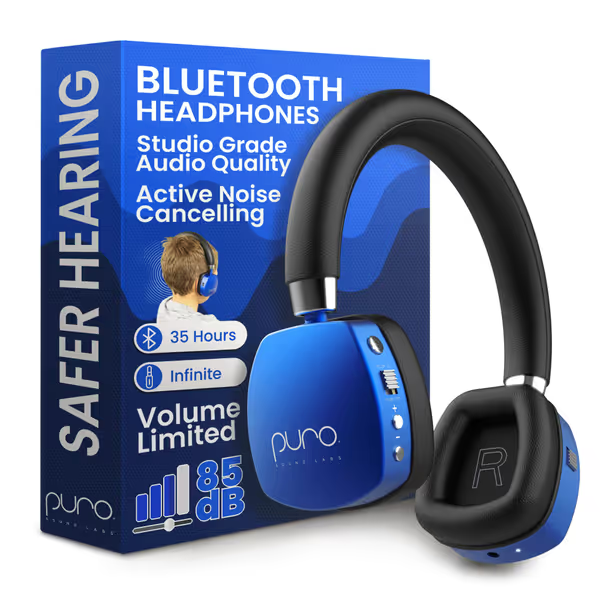
PuroQuiet Plus Kids Headphones
Safe, comfortable audio experience for kids with volume limited protection.
$119
Volume Limit85 dB
Volume Limit85 dB
Pros
Protects hearing with an 85 dB volume limit.
Long battery life: 35 hrs playback (23 with ANC).
Lightweight, comfortable on-ear design for kids.
Cons
Mixed reviews on noise cancellation effectiveness.
Customers give positive feedback about the headphones' build quality and battery life. However, the noise cancellation feature receives mixed reviews, with some saying it's okay while others report it doesn't work at all. Moreover, customers disagree on the sound quality, with some praising it while others find it poor. Additionally, connectivity issues are common, with customers reporting that the headphones would disconnect completely. The fit and functionality also receive mixed reviews, with some saying they work well while others find them completely non-functional. Customers consider the headphones not worth the cost.
Customers give positive feedback about the headphones' build quality and battery life. However, the noise cancellation feature receives mixed reviews, with some saying it's okay while others report it doesn't work at all. Moreover, customers disagree on the sound quality, with some praising it while others find it poor. Additionally, connectivity issues are common, with customers reporting that the headphones would disconnect completely. The fit and functionality also receive mixed reviews, with some saying they work well while others find them completely non-functional. Customers consider the headphones not worth the cost.
Step 2: Ensure Proper Fit for Growing Ear Canals
Standard earbuds often cause discomfort or fall out completely when used by children. Learn more about how earbud fit impacts hearing health so you can size tips with safety in mind. Their ear canals are still developing, creating unique challenges.
Growing Ear Canal Assessment
- Check tip size availability
- Minimum of 4 tip sizes (XXS to M works best for most children)
- Avoid products with only S/M/L options (S is still too large for many kids)
- Evaluate tip materials
- Medical-grade silicone causes fewer reactions
- Foam tips rarely work well for children (sweat and moisture issues)
- Test stability
- Have your child jump, shake head, and run briefly
- Properly fitted earbuds stay in place without constant adjustment
For children under 10, consider products designed specifically for smaller ears. Growing ear canal earbuds should include at least one XXS or "infant" size tip option. Standard small tips often still prove too large for young children.
Step 3: Test Durability Before You Buy
Kids aren't gentle with electronics. What looks durable in packaging often fails within weeks of actual use.
Durability Stress Test Protocol
- Drop test: Simulate 3-foot drops onto carpet and hard surfaces (3x each)
- Flex test: Gently bend cable/wire 10 times (if applicable)
- Button test: Press controls 50 times to check for wear
- Sweat test: Lightly mist and wipe 5 times to check water resistance claims
True durable kids earbuds maintain functionality after these tests. If you're unsure what those water resistance claims really mean, our guide to IPX ratings breaks down sweatproof vs waterproof and care tips. Look for:
- Reinforced cable junctions
- IPX4 or higher water resistance rating
- Scratch-resistant coatings
- Replaceable components (especially ear tips)
Avoid products with visible seams where moisture could enter. Children's earbuds experience more sweat exposure than adult versions due to active play.
Step 4: Validate Seamless Connectivity
Nothing frustrates children (and parents) more than connectivity issues. Reliable pairing matters immensely for daily use.
Multipoint Connection Checklist
- Automatic reconnection within 3 seconds of powering on
- Stable connection at 15+ feet through one wall
- No audio dropouts during head movement
- Consistent pairing across multiple devices
Run this simple test:
- Pair with tablet
- Start audio playback
- Move 15 feet away with one wall obstruction
- Check for dropouts or audio stuttering
Reliability over razzle-dazzle: Fancy features mean nothing if basic connectivity fails. I've eliminated dozens of products that looked impressive on paper but couldn't maintain stable connections during normal home use.
Step 5: Evaluate Educational Features That Matter
Beyond basic audio, consider educational earbud features for children that enhance learning experiences.
Value-Adding Educational Features
- Transparency mode that automatically activates during movement (safety critical)
- Clear voice pickup for virtual learning sessions
- Shareable audio options for group learning
- Easy-to-use controls appropriate for child's age
Avoid gimmicky "educational" features that just add complexity. Simple, reliable functionality beats flashy but unreliable extras every time.
Top-Rated Safe Earbuds for Kids
Based on my rigorous testing protocols, these two products stand out for different needs:
Puro Sound Labs PuroQuiet Plus
Best for: School-aged children needing noise cancellation for focused learning
The PuroQuiet Plus delivers studio-quality sound with reliable 85dB volume limiting that holds true across all content types. Its standout feature is movement-activated transparency mode (audio automatically adjusts when your child is walking or moving), enhancing safety.
Key strengths:
- True hardware volume limiting (verified 85dB max)
- 35-hour battery life (23 hours with ANC)
- IPX4 water resistance withstands sweat and spills
- Lightweight design comfortable for extended wear
- USB-C charging (modern standard kids already use)
Minor drawbacks:
- Slightly heavier than some competitors (still comfortable for most)
- Case is larger than average (less pocket-friendly)
LilGadgets Untangled Pro
Best for: Younger children (4-8 years) needing simple, durable wired/wireless options
These headphones solve the two biggest pain points for young children: durability and sharing. The integrated SharePort lets multiple children connect to one device without splitters (perfect for car trips or classroom use).
Key strengths:
- Volume limited to 93dB (safe for most children)
- 12-hour battery life with quick USB-C charging
- Reinforced stainless steel extenders prevent breakage
- SoftTouch padding comfortable for sensitive skin
- SharePort technology enables effortless sharing
Minor drawbacks:
- Volume limit slightly higher than recommended ideal
- Less noise isolation than over-ear alternatives
The Final Pre-Purchase Checklist
Before hitting 'buy,' run through this verification process:
Safety Verification
- Independent verification of volume limits
- Movement-activated safety features (if wireless)
- Non-toxic materials certification
Fit Verification
- Multiple extra-small tip options included
- Comfortable during 30-minute test wear
- Secure fit during movement tests
Reliability Verification
- Stable connection at 15+ feet
- Quick reconnection after power cycling
- Controls respond consistently
Durability Verification
- IPX4+ water resistance
- Reinforced cable/wire connections
- Scratch-resistant finish
Making Your Selection Today
Choosing the right earbuds creates opportunities for learning, entertainment, and safe listening habits that last a lifetime. Remember that the "best" product depends entirely on your child's specific needs, age, and daily activities.
Take this actionable next step: Before purchasing, visit a local store (if possible) to test fit with your child's ears. If shopping online, choose retailers with generous return policies and verify they include multiple tip sizes. Invest time in the initial fit process (it prevents countless headaches later). Once you’ve picked a pair, keep them performing and hygienic with our guide to cleaning wireless earbuds.
Good audio gear for children shouldn't require constant adjustment or troubleshooting. When you find the right match, it simply works. Your child focuses on learning or play, not fiddling with uncomfortable or unreliable technology. That's the power of thoughtful design meeting real-world needs.
Reliability over razzle-dazzle always wins with children's products. Choose wisely, test thoroughly, and enjoy the peace of mind that comes with knowing your child's hearing is protected by gear that works as promised.
Related Articles